
Macomb County Parole vs Probation
Parole follows release from a Michigan Department of Corrections prison while the prison sentence continues in the community. Probation is a community sentence imposed by a court and does not, by itself, show that the person served a prison term. MDOC Field Operations Administration supervises felony parolees and probationers, but the sentencing court keeps authority over probation conditions. A county-jail release can also occur with no MDOC supervision at all.
| Point | Parole | Probation |
|---|---|---|
| How it begins | Release from MDOC prison under a sentence | Court order for community supervision |
| What OTIS proves | Parole status, date paroled, and assigned location when shown | MDOC-supervised probation status and assigned location |
| Main authority | Michigan Parole Board and MDOC | Sentencing court, with MDOC supervision for covered felony cases |
| How it ends | Discharge from the sentence | Court and agency completion or discharge process |
Verify Macomb County Post-Release Supervision
The public person-level starting point is the MDOC Offender Tracking Information System, known as OTIS. It covers prisoners, parolees, MDOC-supervised probationers, absconders, and people discharged within the state system’s stated display period. It does not cover a jail-only sentence or every municipal detention event. Use an MDOC number when known because it is more exact than a name alone.
- Search OTIS by MDOC number or enter the last name and useful identity fields.
- Select All, Parolees, Probationers, or the applicable absconder filter instead of relying only on the default active view.
- Open the offender-number result and compare name, date of birth, status, and offense details.
- For parole, read status with `DATE PAROLED` and the location or reporting-office link.
- For probation, confirm that the result describes probation and not release from a prison term.
- Contact the office attached to the record when a current or corrected status is needed.
Note: A common name should never be matched on spelling alone; compare the MDOC number, date of birth, agency, and case details.
OTIS also supports first name, sex, race, age, marks or scars or tattoos, and status filters. A wildcard can follow at least three leading surname letters, while the age control searches a small range around the entered age. Marks, scars, and tattoos require exact text and can be a poor first filter. The system uses the current legal name. Open the offender-number link for the full detail and use the location link for the listed facility or supervision-office contact.
A released person who was held only at Macomb County Jail will not become an OTIS parolee merely because the county roster no longer shows the name. Jail-only releases belong in the Sheriff and court records. By contrast, a person transferred from the jail to MDOC may later appear in OTIS after the state booking record updates. Identifying the last custodian prevents those two paths from being mixed.
The official OTIS search shows the filters used to separate parole, probation, discharge, and absconder records.
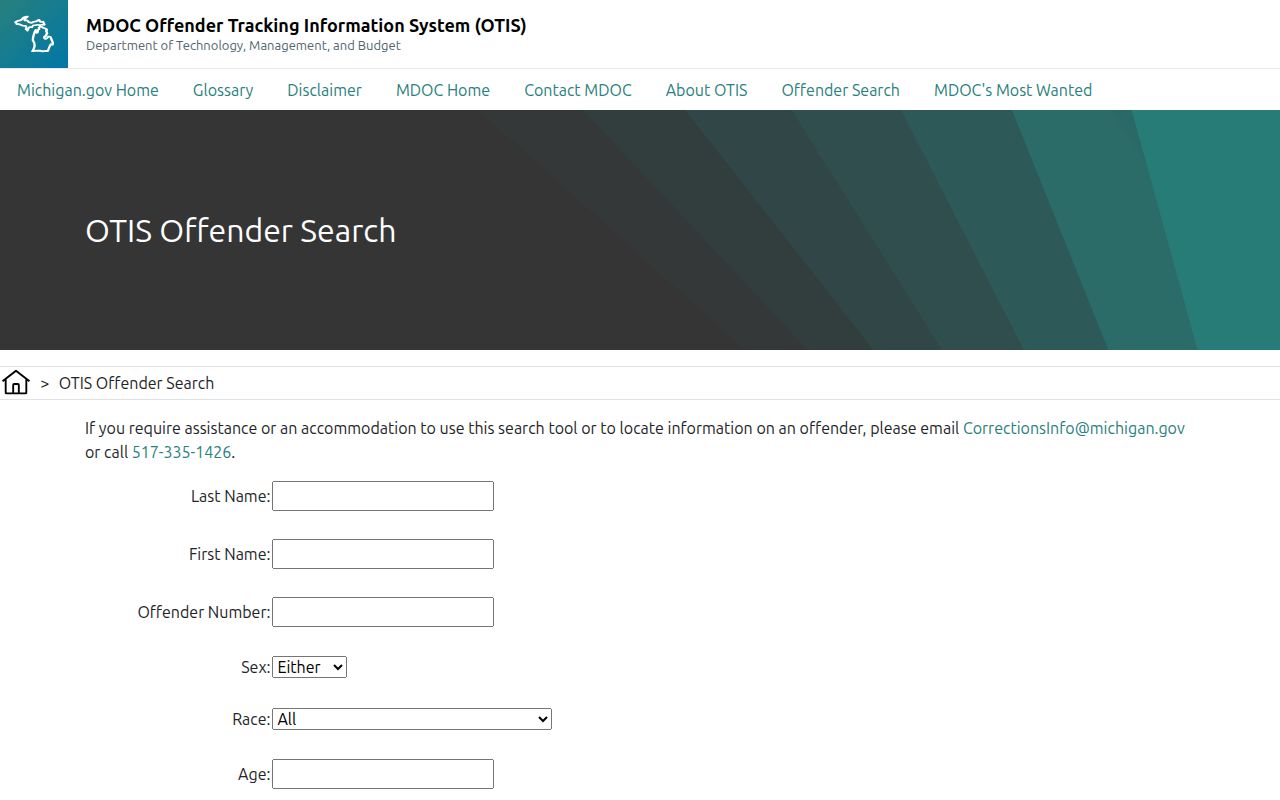
Those filters matter because a discharged record can be missed when a search is limited to active offenders.
Macomb County Supervision Offices
Macomb County falls within MDOC Region 10 Northeast. The official Region 10 directory identifies separate local contacts. The office shown in the person’s OTIS location field is the best one to call, since a home address does not establish which office holds the file.
Northeast Operations
32 Market Street
Mount Clemens, MI 48043
586-466-4511
Macomb County Probation Office
32 Market Street
Mount Clemens, MI 48043
586-469-5330
Macomb Parole Office
15950 East 12 Mile Road
Roseville, MI 48066
586-773-1209
The Macomb parole and probation directory provides the local office records shown here.
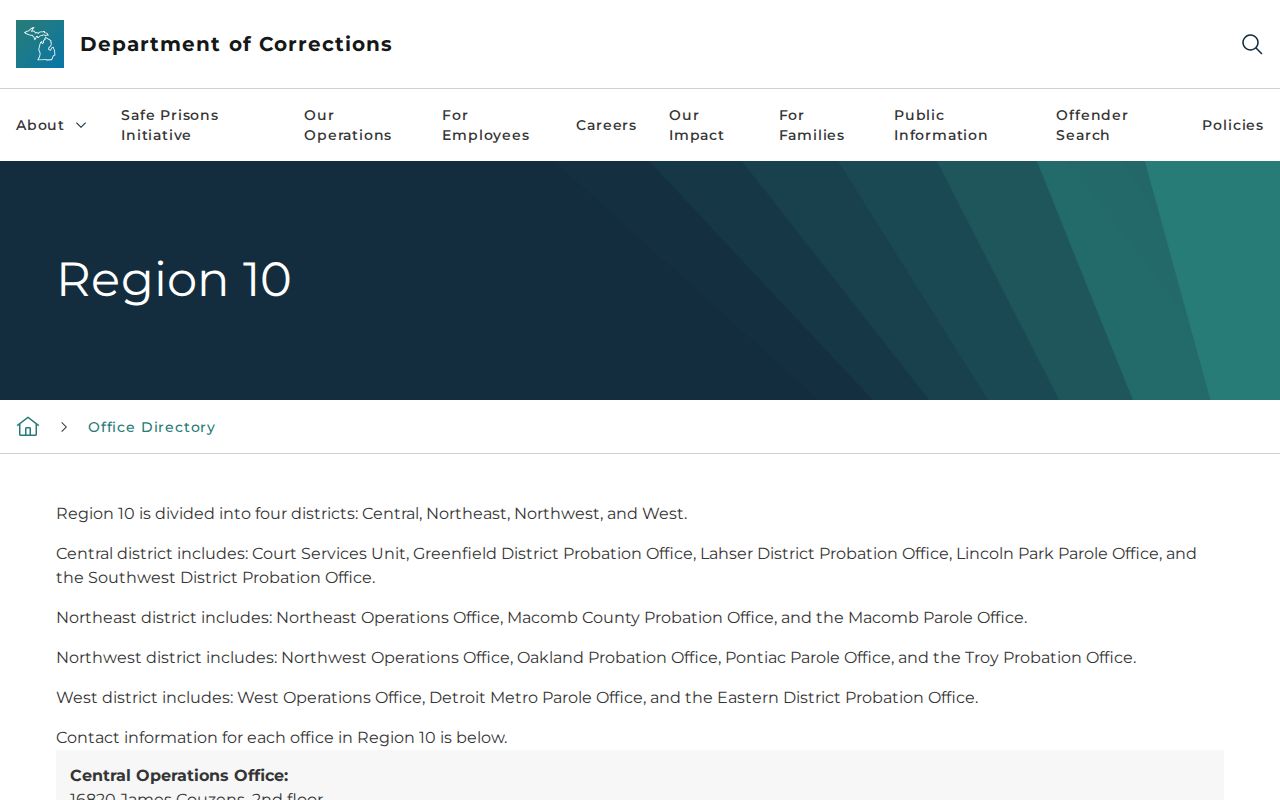
The directory makes it possible to route a status question to probation in Mount Clemens or parole in Roseville without guessing.
Macomb County Supervision Status Meanings
An OTIS parolee result generally supports release from prison with the sentence still active. A probationer result supports a court-ordered community status but says nothing by itself about prior prison custody. “Paroled in custody” is especially important: Michigan parole status has been conferred, yet another jurisdiction still holds the person. That label is not proof that the person is in the community.
A `DATE PAROLED` is an actual parole event, while `EARLIEST RELEASE DATE` is normally the point at which parole jurisdiction can begin. Serving the minimum does not compel release. Under MCL 791.233, the Board must make the required statutory determination. Current status, location, and the agency record should be read together.
OTIS can also show a controlling statute, offense and sentence information, identity fields, and a photograph when available. MDOC does not promise a photo for every person. The public database generally keeps a discharged person visible for three years after discharge from supervision. This is different from three years after prison release, since parole can continue between those events.
If an OTIS result appears inaccurate or incomplete, MDOC directs content questions to `correctionsinfo@michigan.gov` and technical problems to `mdocwebmaster@michigan.gov`. A court-derived sentence error should go to the sentencing court, while a supervision-status issue should go to the assigned office. Those routes preserve the difference between correcting the source and merely reporting that another site copied it.
Note: A court order, parole grant, and physical exit can be separate events, so the current location field remains part of verification.
Macomb County Absconder and Violation Records
An absconder status means required supervision whereabouts are not being maintained. It is not a successful discharge. MDOC distinguishes parole absconders, who are sought by the department, from probation absconders, who remain under the sentencing county’s jurisdiction. OTIS offers separate filters for those categories, which is more precise than treating any missed contact as a public warrant finding.
Conditions and alleged violations are case-specific. A public result can identify status and office, but it may not supply the full order, violation allegation, or court action. Contact the assigned office for supervision information and use the sentencing court for the probation order or later court filing. MDOC publishes an Absconder/Escapee Tip Line at 517-755-0855. Do not approach or attempt to detain a person based on a web result.
MI-VINE can provide custody-event notices for participating feeds, but it is not a general supervision-violation docket. The state registry is also offense-limited and cannot be used as a substitute for OTIS or the sentencing court.
MI-VINE is most useful when registration occurs while the person remains in custody. It can report release, transfer, or escape events from participating feeds, yet a notification describes the reporting agency’s custody change. It does not establish a parole violation, probation discharge, or the absence of another hold. MDOC Crime Victim Services also maintains a separate registration path for covered state-prison parole notices, so a county-jail alert is not blanket enrollment in every state notice program.
Macomb County Reentry and Community Supervision
Macomb Community Corrections occupies a different part of the local system. It supports pretrial supervision and court-approved community alternatives, while the county’s Safe and Healthy Macomb work describes centralized intake assessment, diversion, and a planned stabilization and treatment layer. These programs can help explain a person’s local court path, but they are not evidence that a named person was released or placed on parole.
The Macomb Community Corrections page is the official starting point for its services and referral channel. Its public office is at 43565 Elizabeth Road in Mount Clemens. A person’s legal status still must be verified through OTIS, the assigned MDOC office, or the court record that ordered the local program.
Note: Community Corrections, MDOC parole, and felony probation can overlap in local navigation, but each proves a different legal or service relationship.
Macomb County Release Property Rules
Property questions can be mistaken for proof of supervision or release. The Macomb County Jail’s inmate-services rules distinguish valuables from clothing and describe an in-custody person authorizing the release of valuables during the stated 9:00 a.m. to 1:00 p.m. window. That is not a general promise that every released person can return during those hours for property.
When a person transfers from Macomb County Jail to prison, the Sheriff says boxed property is held for an authorized pickup for only 14 days. This is a transfer rule, not a parole condition and not an MDOC discharge rule. Confirm the transfer with the jail, then direct parole or probation questions to the office shown in OTIS.
The Sheriff’s inmate-services page states the valuables window and prison-transfer hold.
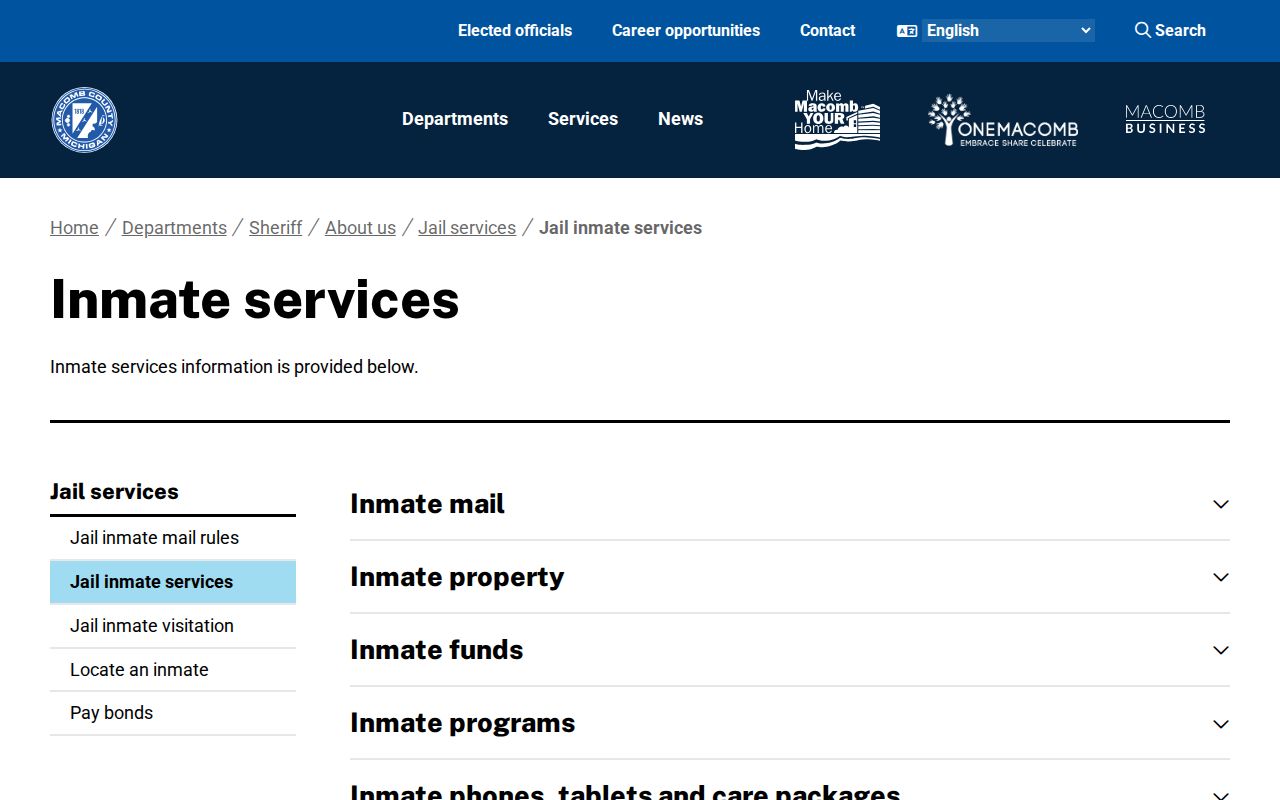
The published limits prevent a property procedure from being broadened into an unsupported post-release pickup policy.
When Macomb County Supervision Ends
Successful completion of parole results in discharge from the sentence. OTIS uses `DISCHRG` to show that displayed MDOC supervision has ended, and the public system generally retains a discharged person for three years after supervision discharge. That period runs from discharge, not merely from the day the person left prison. Older or more formal proof may require an MDOC records request.
A parole grant alone is not discharge and does not guarantee the physical exit date. Prerequisites can remain, and another jurisdiction can hold the person. For documentary proof, request a discharge certificate or other releasable file from MDOC. For a probation matter, reconcile OTIS with the sentencing court because the court retains authority over the probation order.
MDOC’s records channels distinguish current and past prisoners. A focused request can identify the person by full name and MDOC number and ask for the discharge certificate, date-paroled record, or another precise document and date range. Some items in a larger correctional file can be confidential or redacted, so the request should not assume that every part of a PENPACK is public.
The broader Macomb County released-inmate search and records guide explains how a Sheriff release transaction and court disposition differ from an MDOC supervision record. The key is to name the event precisely: release from jail, parole from prison, completion of probation, or discharge from the sentence.