
Macomb 72-Hour Release Fallback
The Macomb County Sheriff does not publish a distinct 72-hour release list. Its official inmate page directs visitors to JailTracker as a way to locate an inmate. The page does not promise a three-day archive, a released-person filter, a publication schedule, or any fixed retention period after release.
A three-day list therefore cannot be reconstructed by copying current search results or treating every missing name as released. JailTracker answers whether a matching record is visible at the time of the check. It cannot show whether a person vanished one hour or three days earlier. Nor can roster absence distinguish bond release, sentence completion, dismissal, transfer, or a failed name match.
The Sheriff’s current-only locator gateway identifies the official starting source.
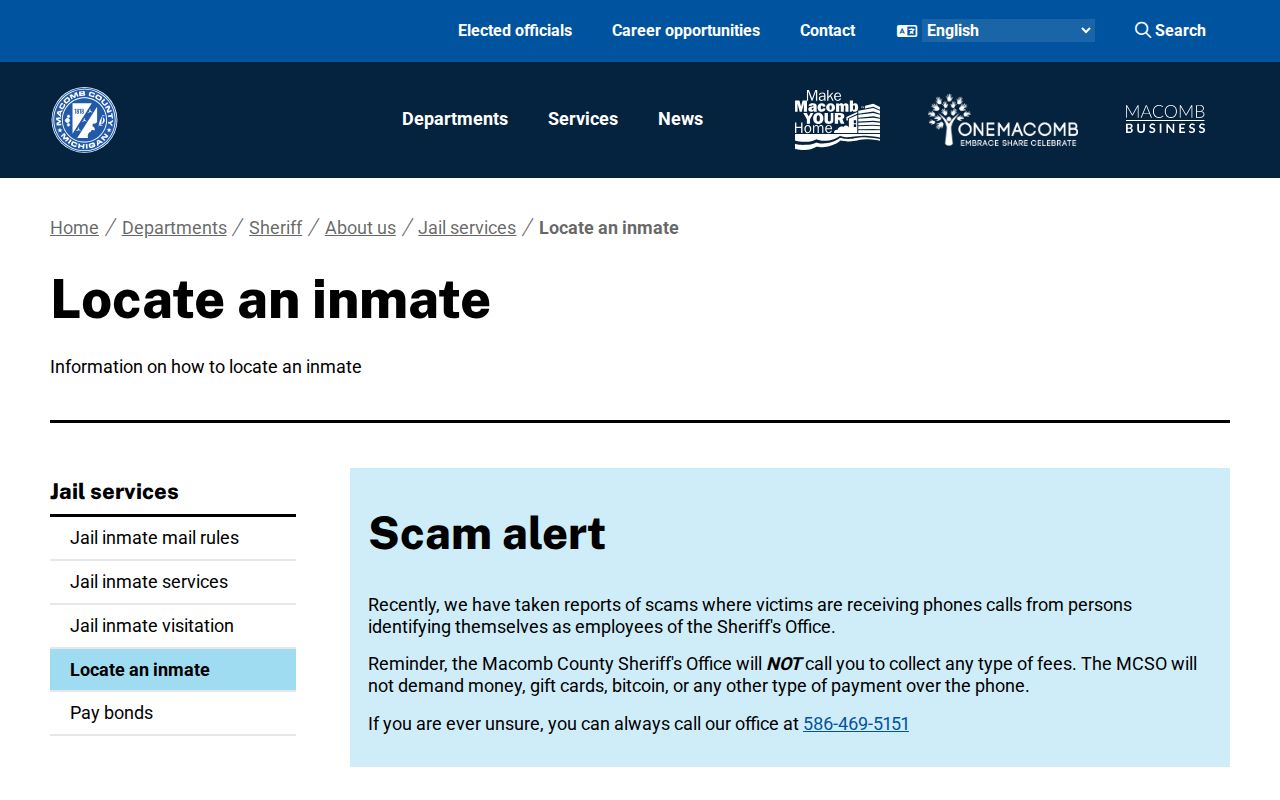
Because the gateway offers no historical window, official event records must supply the dates in a three-day review.
Check Macomb 72-Hour Releases
Use a fixed start and end time for the review. A phrase such as “over the weekend” can mean different spans to different people. Set the exact three-day interval, then preserve the date and time for every source check. The Sheriff’s response and each court entry can then be tested against the same period.
- Search Macomb JailTracker and record when the current roster was checked.
- Call MCSO at 586-469-5151 for the person’s current status and ask whether the last county event was release or transfer.
- Search the relevant district court or Circuit CourtView for a bond, dismissal, judgment, sentence, or other order within the period.
- Request the Sheriff’s release transaction, naming the booking and the exact three-day date range.
- Compare any saved MI-VINE release or transfer message with the reporting agency and event time.
- Follow a reported transfer into OTIS for MDOC, the BOP or U.S. Marshals route for federal custody, or ICE channels for immigration custody.
Use the 24-Hour Releases page when the question is limited to today. The three-day process is better for a multi-day gap, but both require the same custody-specific proof.
Note: A set 72-hour interval makes it possible to compare records without quietly shifting the beginning or end of the search.
Macomb 72-Hour Release Fields
Since no public list exists, Macomb County publishes no online 72-hour field inventory. The right substitute is a narrowly framed records request for each known person and booking. Ask for the event fields that establish what occurred during the selected period. Do not imply that these fields appear in JailTracker after release.
| Record field | Use in a three-day check |
|---|---|
| Legal name, DOB, and booking identifier | Matches the record to one person and one custody stay. |
| Booking date and time | Separates the selected stay from earlier Macomb County bookings. |
| Release date and time | Places the Sheriff’s custody-ending transaction inside or outside the chosen 72-hour span. |
| Release reason or transaction type | May identify bond, time served, dismissal, sentence end, or transfer. |
| Releasing authority | Connects the event to the court or other legal source. |
| Destination or receiving agency | Shows whether the person went to the community or remained in another custodian’s control. |
The Sheriff may redact or withhold a field under a valid exemption. If only the custody interval is needed, the Records Office also provides proof of incarceration for $4 with photo identification. Ask whether the issued proof includes the exact end time before relying on it as a full release record.
Macomb Weekend Release Verification
A 72-hour span can bridge days when routine office access is limited, but Macomb County publishes no special weekend release feed. Research found no fixed weekend schedule and no Friday-early-release rule to apply. Do not assign an estimated day merely because the person was present before the weekend and absent afterward.
Build a clean sequence instead. A district court docket can show a bond or disposition. Circuit CourtView can show an event after a felony bind-over. MI-VINE may preserve a notice from a participating agency if someone registered in advance. MCSO records can provide the actual booking-release transaction. Those sources may update at different times, so the event itself matters more than when a public screen was viewed.
A court order and a physical release are not identical. Jail processing may continue after a bond action, and another hold can change the destination. Where the record says transfer, contact the receiving source before describing the person as being in the community.
- Court event
- The order, bond, dismissal, or sentence action in the legal case.
- Release transaction
- The Sheriff’s recorded end of its custody event.
- Transfer
- A move from MCSO custody into another agency’s custody.
- Notification event
- A custody change reported through MI-VINE by a participating source.
Request Macomb Three-Day Records
The MCSO Records Office accepts written FOIA requests at records.mcso@macombcountymi.gov. Give a full legal name, date of birth if known, booking or jacket number, case number, and a clear booking date range. State that the request seeks the booking and release transaction, not just a general inmate file.
Ask for the admission date and time, release date and time, releasing authority, release type or reason, and destination or receiving agency if maintained. Request the booking photo separately if needed because it can be treated as a distinct record. A focused request helps the office locate one event and makes the three-day period clear.
The official Records Office page documents the county channel, office information, fee method, and proof-of-incarceration service.
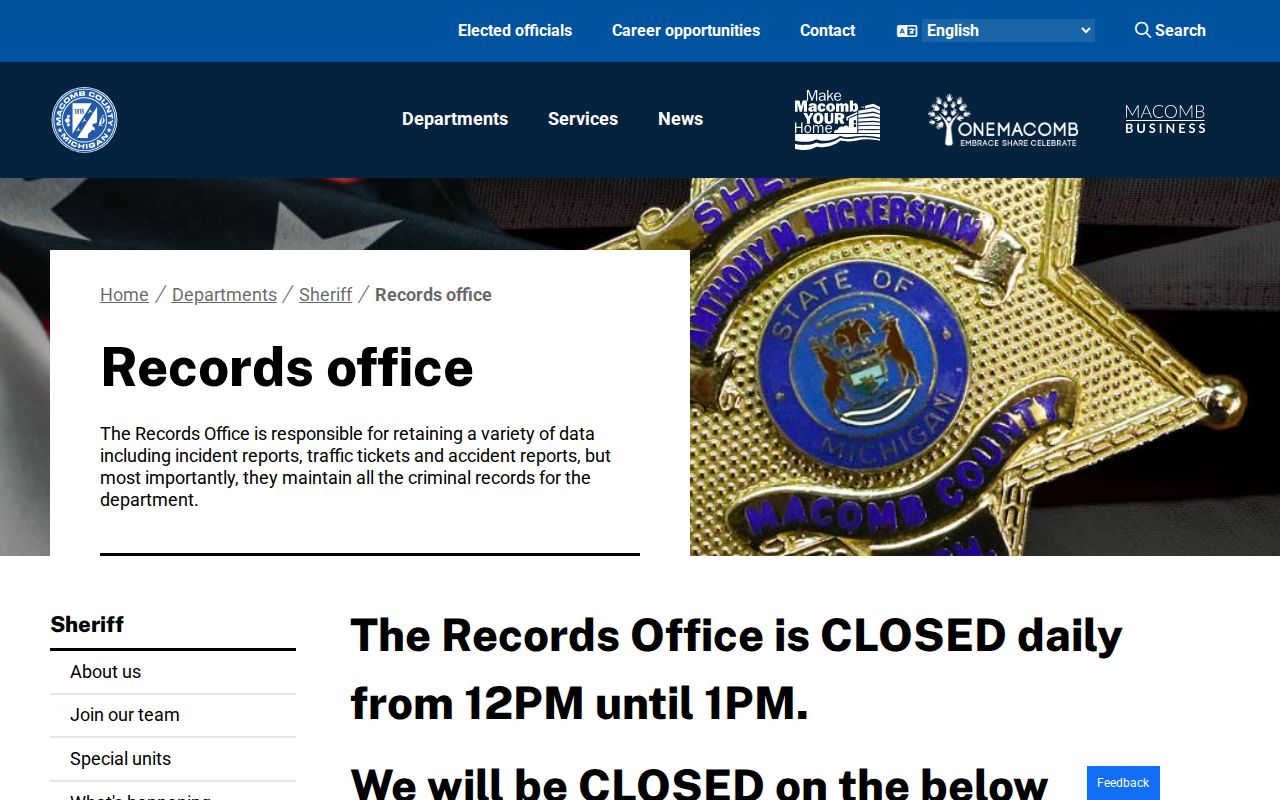
This archival route is more dependable than expecting a name to remain on a live roster for three days.
Note: Michigan courts are not subject to FOIA, so request court papers through the clerk rather than the Sheriff’s records process.
Macomb 72-Hour Roster Limits
The absence of a published retention rule is the key Macomb-specific data issue. The Sheriff does not say that a booking remains visible for 24, 48, or 72 hours after release. It also gives no cadence for a released-record archive because no such archive was located. That means two people who check JailTracker at different times may see different current snapshots without either screen proving an earlier exit time.
Use roster presence as a current-status clue only. Use absence as a prompt for more checks. Call MCSO, review the case, and request the event record. If MI-VINE issued an alert, note its reporting agency and event, then reconcile it with the Sheriff and court. This chain can reveal that a court ordered release on one day, MCSO processed it later, and another agency assumed custody soon afterward.
| Three-day evidence | What it proves | What it does not prove |
|---|---|---|
| Current JailTracker match | A record is visible in the live county source at check time. | Whether a future release will occur during the period. |
| No current match | No matching visible record was found then. | The release date, reason, or destination. |
| Court docket entry | A legal case event was recorded. | The exact time jail staff ended custody. |
| MCSO release transaction | The county’s recorded custody event and releasable fields. | Whether a receiving agency later changed its status. |
Macomb Release Custody Paths
Macomb County Jail, the Warren and Roseville municipal detention facilities, Macomb Correctional Facility, and federal or immigration authorities do not share one universal release list. A city detainee may never appear in Macomb JailTracker unless a transfer to the county is booked. A person leaving Macomb Correctional Facility is an MDOC case and must be checked in OTIS.
OTIS covers state prisoners, parolees, MDOC-supervised probationers, absconders, and discharged records within its stated period. It excludes county-jail-only releases. A parole result means the person left prison but remains under supervision. A `DISCHRG` status means the displayed MDOC supervision ended. Those are not interchangeable with a Macomb County Jail release record.
For federal prison, the BOP locator can show a federal release date and a released or no-longer-in-custody result. ICE’s locator covers current and recent immigration custody within its limits. A U.S. Marshals transfer may require direct agency records because there is no public released-person locator comparable to BOP. Always name the custodian whose record supports the claim.
Confirm Macomb 72-Hour Releases
Close the review by creating one event line per person: full identifying details, the agency that held the person, the exact event, the recorded date and time, the destination if known, and the source. Avoid a bare label such as “released” when the record says transferred, paroled, or discharged. Each word has a different scope.
When sources conflict, compare what each one measures. A court may show authority for bond. MCSO may record physical release hours later. MI-VINE may report the agency’s custody change after its feed updates. OTIS may appear only after MDOC receives and processes a transfer. The time gap does not make one source false, but it prevents the current roster from serving as a self-contained 72-hour list.
The defensible Macomb answer is a dated verification chain, not an invented feed. Sheriff records provide the county event. Court records provide the legal basis. VINE offers prospective notice, while OTIS, BOP, or ICE follows a transfer into the relevant system. The Macomb County released inmate search maps those sources when the last custodian is uncertain.