
Macomb County Booking Photos as Records
A booking photograph is created during an arrest or intake process. Release from the Macomb County Jail does not erase that record, but it also does not require the Sheriff to publish an online mugshot gallery. Michigan’s Attorney General FOIA Handbook explains that a sheriff-held booking photograph is a public record subject to ordinary FOIA analysis, exemptions, redaction, fees, identity matching, and retention.
The photograph documents a booking, not the outcome of the charge and not present custody. A court may later dismiss a case, enter a judgment, or set aside an eligible conviction. The jail may release the person to the community or transfer that person to another agency. Current status must be checked through the custodian, court record, OTIS, or another proper locator rather than inferred from the existence of a photo.
Identity matching matters because booking images are tied to a specific intake. A full legal name, date of birth, booking or jacket number, case number, and date range help distinguish people who share a name. The related release transaction can show which booking ended, but a separate request for the photograph remains useful when the agency stores or processes the image as its own item.
Note: Public-record status supports a request to the custodian, but it does not create a duty to maintain a searchable online gallery.
Where Macomb County Released Mugshots Appear
Each channel has a different scope. The Sheriff’s record is the best path to a county booking photo. OTIS may display a correctional photograph for an MDOC person, which is not necessarily the same image. Other official sources are limited by offense, agency, or publication purpose.
| Channel | Has photo? | How to access |
|---|---|---|
| Macomb JailTracker | Not promised by current official pages | Use only for present roster status and visually check the live interface |
| MCSO Records | Request the booking photo directly | Send a focused Michigan FOIA request with person and booking identifiers |
| Macomb Sheriff app | No mugshot feature advertised | Do not treat the app as a photo or release feed |
| MDOC OTIS | May display a state correctional photo | Open the matched offender-number detail |
| Michigan sex-offender registry | Photo shown for people legally required to appear | Use only within that registry’s offense-limited scope |
| News and agency releases | Sometimes | Use as secondary image evidence, then verify status with the custodian |
| Commercial copies | Sometimes | Treat as potentially stale or mismatched; no commercial source is endorsed |
Federal sources add another limit. The BOP public locator provides status and release-date information, not a general released-person photo channel. VINELink is designed for custody information and notification; no static source establishes it as Macomb County’s booking-photo archive.
A transfer also changes the likely photo source. Macomb County Jail may hold a county booking image, while an OTIS record may later display an MDOC correctional image. Warren or Roseville municipal detention can create another local event before a county transfer. The images should not be labeled as interchangeable merely because they show the same person.
Request a Macomb County Booking Photo
The direct local route is a written request to MCSO Records at `records.mcso@macombcountymi.gov`. Identify the photo as a separate requested item because it may be handled apart from the release transaction. A common name without date, case, or booking identifiers risks retrieving the wrong record.
- Give the full legal name and date of birth when known.
- Add the booking or jacket number, case number, and approximate booking date or range.
- Ask expressly for the associated booking photograph as a separate item.
- If release verification also matters, separately request booking and release date and time, release type, authority, and destination if maintained.
- Ask the office to state whether a requested item is not maintained or is withheld under a cited exemption.
- Keep the written response and image with the identifier used to match the person.
Macomb County may charge allowable labor, copying, media, and postage costs. Labor is calculated using the lowest-paid capable employee in specified time increments, and paper copies can carry the published per-page charge. A deposit can apply when the estimate crosses the county threshold. The initial response clock under MCL 15.235 is generally five business days, with one permitted extension of up to ten business days, but production of a large request can take longer.
The MCSO Records Office page provides the written FOIA channel, office schedule, and fee method.
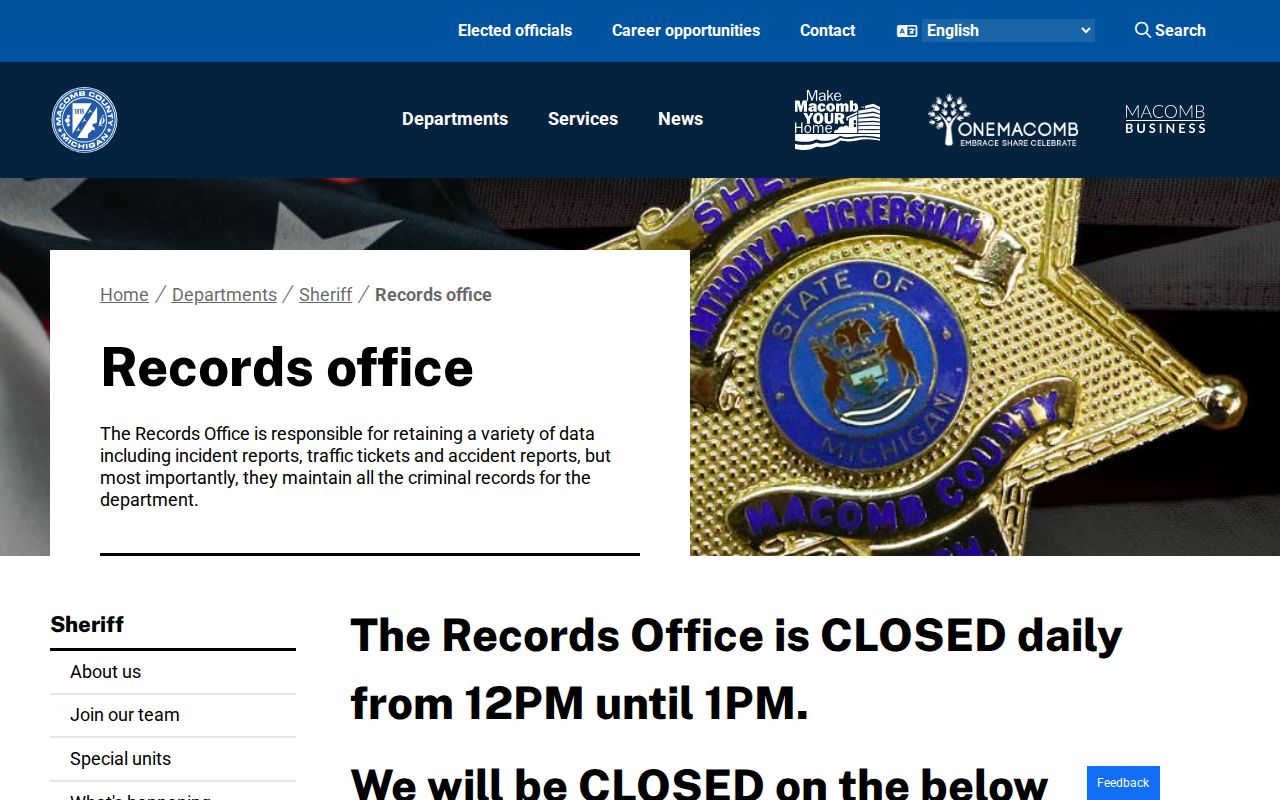
The office is the durable photo path when a live roster does not display or retain the requested booking image.
Macomb County Mugshot Policy Specifics
The current official Macomb inmate gateway does not promise that roster photos appear online. The live JailTracker capture failed in the project manifest, so no screenshot or unsupported field claim can stand in for direct visual confirmation. No released-photo archive was found, and the county publishes no statement that a booking image remains visible for a set period after release.
A historical official Sheriff annual report recorded receipts for “Proof of Incarcerations/Mugs.” That older wording supports the Records Office as a local booking-photo channel, but it does not establish a current flat photo fee or a standing web gallery. The defensible present-day process is to ask MCSO Records for the identified photograph and let the agency state what it maintains and can release.
The official Sheriff records source is therefore more useful for a released person than assuming a vanished roster entry once carried a photo.
Note: A missing JailTracker name does not distinguish release to the community from transfer to state, federal, immigration, or other local custody.
Macomb County Sheriff App Mugshot Limits
The County of Macomb has an official Sheriff Android app, but the store listing advertises agency notifications, anonymous tips, events, department information, and links. It does not advertise inmate lookup, recent releases, or mugshots. The app should not be presented as an alternate photo gallery when the Sheriff’s website has no released-person archive.
The official Macomb Sheriff app listing shows the features the county actually describes.
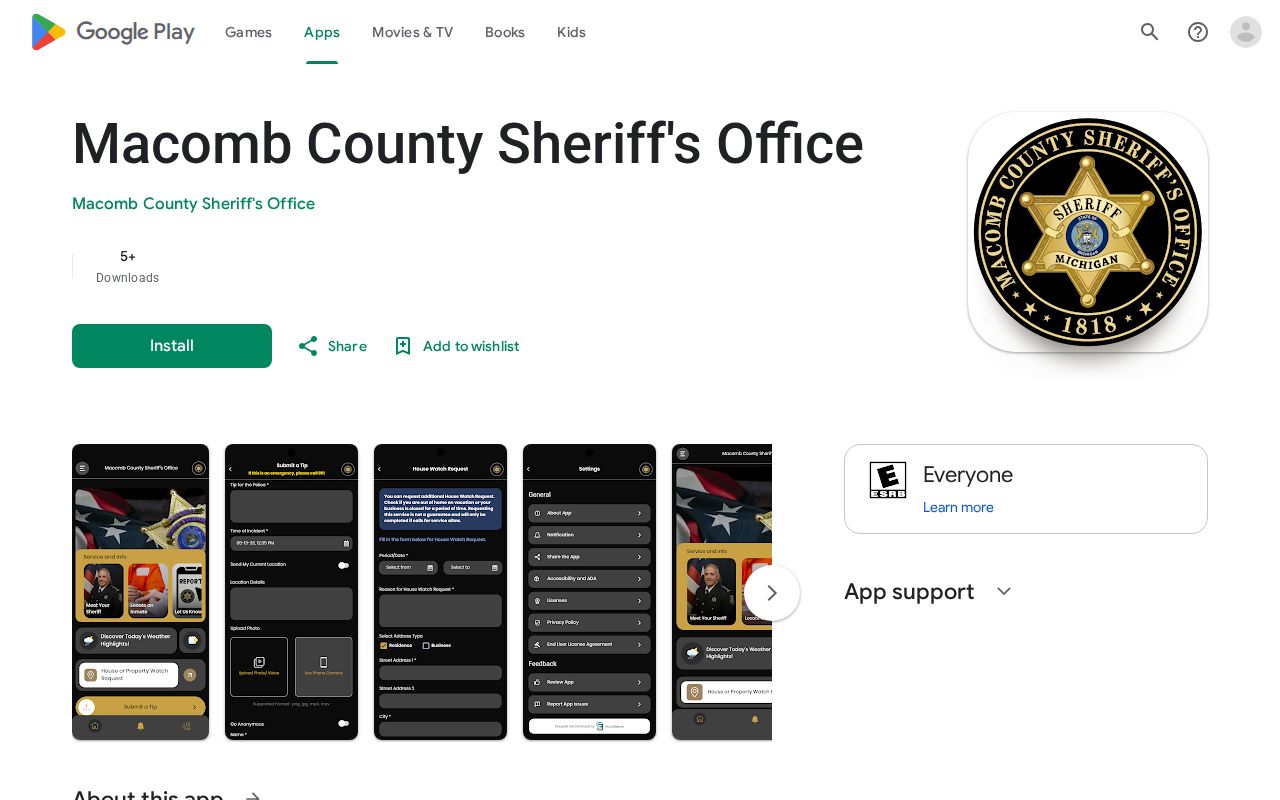
The store description supports using the app for alerts and agency information, not claiming an unlisted inmate-photo function.
For recent release timing, the same limit applies: Macomb County does not publish an official rolling release gallery. The Macomb County 24-hour release guide leads with the records, court, phone, and notification fallback instead of inventing a feed.
Macomb County State Corrections Photos
OTIS can display a Michigan correctional photograph on an offender detail, although MDOC warns that a photo may be absent. It is a state correctional image and should not be labeled as the person’s Macomb County Jail booking photo. OTIS covers state prisoners, parolees, MDOC-supervised probationers, absconders, and people within the stated post-discharge display period. It excludes county-jail-only releases.
Search by MDOC number when possible, or use a name with identity filters. Open the offender-number result and compare date of birth, status, location, offense details, and the image. The public system normally retains a person for three years after discharge from MDOC supervision, not simply three years after release from prison. Older state records may require an MDOC records request.
The Michigan Public Sex Offender Registry is narrower. It can show a photo and registration information only for people legally required to appear. An Active record can corroborate community registration, but it does not prove a jail-release date. Many released people are outside that registry, so no missing result should be treated as missing custody evidence.
The official Michigan registry search displays the fields and status choices used within its limited legal scope.
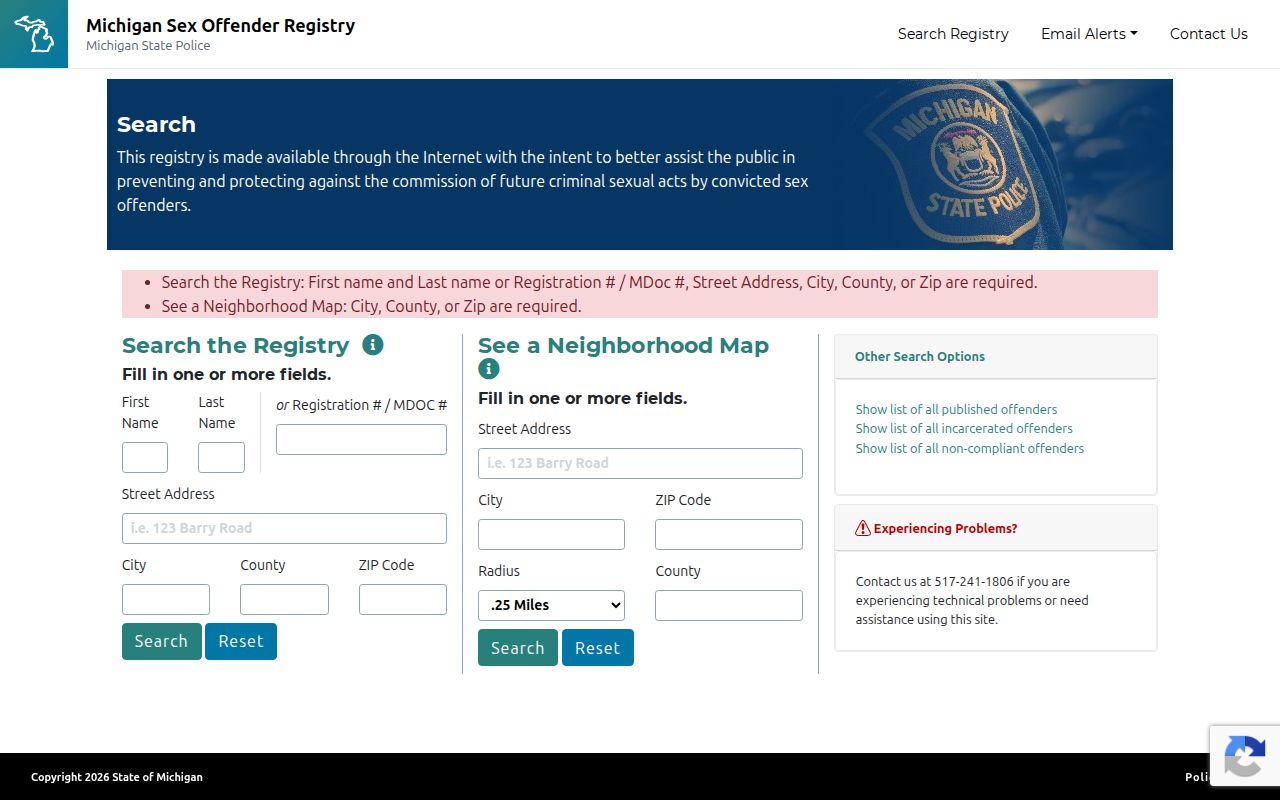
The registry image illustrates a specialized official photo route, not a general list of Macomb County released inmates.
Macomb County Mugshots in Secondary Sources
An agency press release or a local news report can lawfully reproduce a booking or correctional photo. Such an image may help identify what was published at a point in time, but it is secondary evidence. It does not prove that a person remains in custody, has been released, or has completed a case. Check the current agency and court record for those facts.
Commercial mugshot publishers and other aggregators can keep copies after the official source changes. Their records may be stale, mismatched, or detached from a later case disposition. No commercial mugshot publisher, data broker, or paid removal service is linked or endorsed. When an image is wrong, the first useful step is to identify the original government record and the legal status of the case.
Note: Always preserve the source date and matching identifier when comparing a secondary image with an official booking or offender record.
Macomb County Mugshots and Set-Asides
Release alone is not expungement and does not remove a booking photo. Michigan’s Clean Slate automatic set-aside process began on April 11, 2023 for eligible matters after the applicable conditions and waiting periods. Application-based set-aside remains a separate court process. Eligibility, exclusions, intervening events, and the type of conviction all matter.
Under MCL 780.622 and court rules, a covered set-aside makes arrest, conviction, and sentence material nonpublic except as law allows, while MSP keeps a nonpublic record. Public court copies must redact covered conviction information. The Macomb court-record channel provides local document access. A set-aside can explain why an older public court or corrections result disappears, but official sources do not promise that every independent copy of a photo will vanish.
No enacted Michigan anti-pay-to-remove mugshot law was found in the official sources reviewed. That absence should not be turned into advice to buy removal. A person seeking correction or removal should contact the publishing agency with the set-aside order or other relevant official record and use that source’s correction process. Independent publishers control their own copies subject to applicable law.